
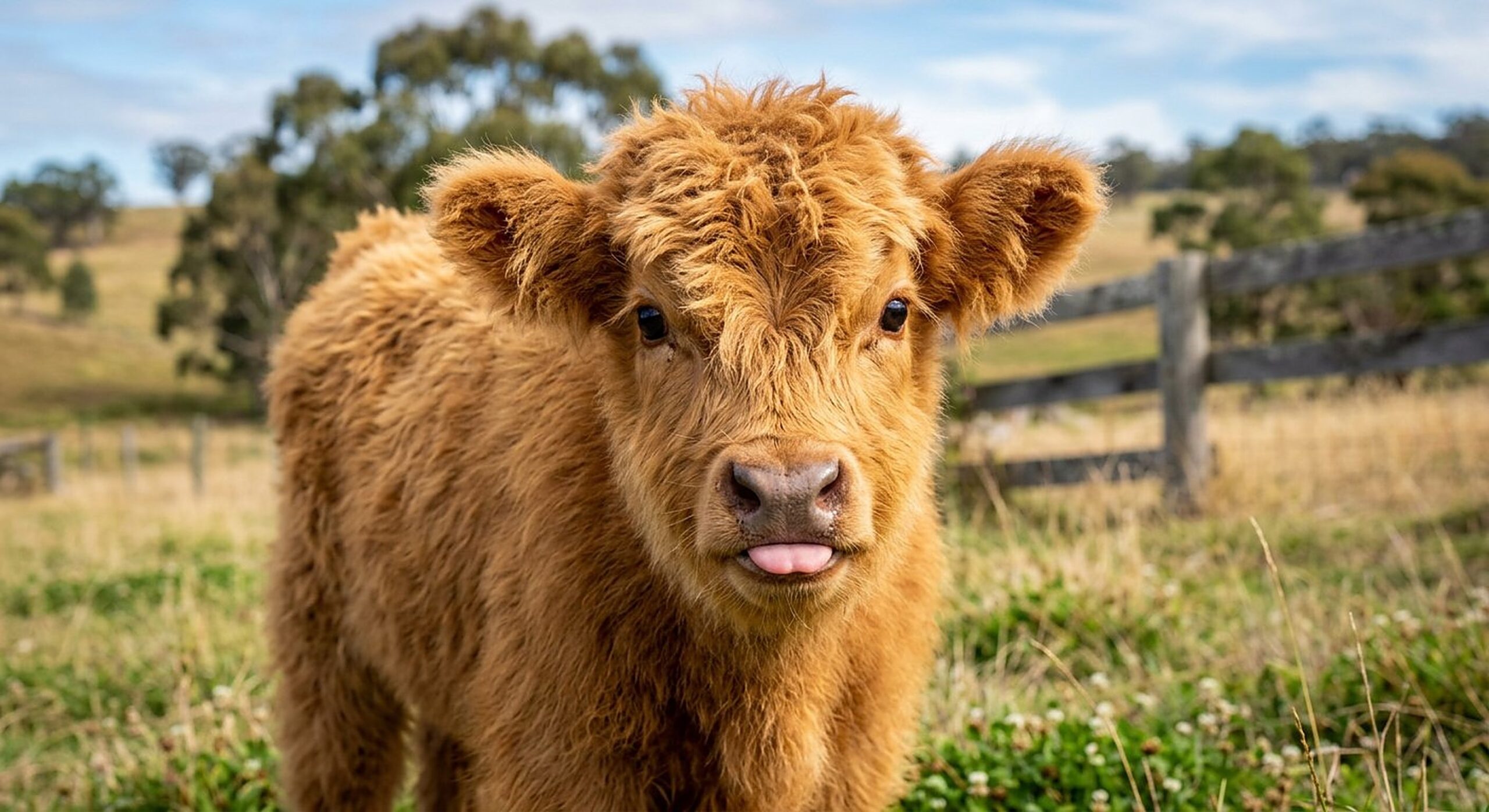
Good miniature highland cattle care basics are unglamorous and everything: water, forage, minerals, observation. This guide lays out the daily, weekly and seasonal rhythm that keeps Highlands thriving in Australian conditions.
This guide is part of the Mossvale library for Australian families researching miniature highland cattle care basics. It is written by cattle people, kept honest, and linked throughout to our care guide, buying guide and calf showcase — settle in, because the fluffy rabbit hole is also an educational one.
The daily non-negotiables — Miniature Highland Cattle Care Basics
Fresh water checked and cleaned, eyes on every animal, fence and gate sanity check. Miniature highland cattle care basics begin with looking — appetite, movement, manure and mood tell you almost everything, once you learn your herd’s normal.
Consistency compounds. Cattle read routines like weather forecasts — feeding times, handling patterns, the sound of your gate. The more predictable your rhythm, the calmer the herd and the clearer any deviation becomes when something genuinely needs attention.
Feeding foundations
Pasture first, quality hay when pasture falls short, and cattle minerals available constantly. Highlands are efficient converters; overfeeding rich feed causes more trouble than honest forage ever will. Condition-score regularly and adjust before animals tell you to.
Seasonal planning is the other half of that consistency. Hay bought before the shortage, shade finished before the heatwave, yards repaired before the weaning weekend — cattle keeping rewards those who run a month ahead of the calendar.

Weekly and monthly rhythm — Miniature Highland Cattle Care Basics
Trough scrubbing, fence walks, parasite awareness suited to your district, and handling practice while animals are young. Note observations — a simple paddock notebook becomes gold at vet visits and breeding decisions.
And keep learning locally. Join your breed society, buy your vet a coffee at the clinic desk, and swap notes with the cattle people at the produce store. Herds improve at the speed of their owners’ education.
Seasonal thinking
Summer: shade, water volume, fly awareness. Winter: hay reserves, mud control, wind shelter. Our full care guide goes deeper, and your local vet becomes the most valuable subscription you own. Hardy breed, yes — low-maintenance, never.
Consistency compounds. Cattle read routines like weather forecasts — feeding times, handling patterns, the sound of your gate. The more predictable your rhythm, the calmer the herd and the clearer any deviation becomes when something genuinely needs attention.
How Mossvale can help
Whether your interest in miniature highland cattle care basics is curiosity or a credit-card-adjacent level of serious, our door is the enquiry form. Browse the Available Calves showcase to shortlist colours, read what families say about the experience, and when you’re ready, enquire with your questions and preferences.
A word about advice: the best cattle care is local. Your vet, your district’s experienced owners and your own paddock notebook will out-advise any website — including this one. Use guides like ours to frame the questions, then let local knowledge sharpen the answers for your soil, your rainfall and your herd.
Observation is the cheapest health technology ever invented. Ten honest minutes a day — appetites, manure, movement, mood — catches most problems while they’re still small and inexpensive. Highlands reward watchers; they have been advertising their wellbeing in body language for centuries.
Keep records like a professional, even with two cattle. Feed changes, treatments, weights, calving notes, that odd Tuesday a heifer seemed quiet — the notebook you keep this year becomes the expertise you lend a neighbour in five years’ time.
There’s no wrong question about miniature highland cattle care basics; there’s only the expensive kind you didn’t ask. Take your time with miniature highland cattle care basics research — cattle reward the patient at every single stage. A good miniature highland cattle care basics decision balances the head’s spreadsheet and the heart’s shortlist, in that order and then that order reversed. Families tell us the miniature highland cattle care basics research phase became half the fun. Keep reading; the paddock is patient.
If a miniature highland cattle care basics is the search that brought you here, save this guide and compare it against every other tab you have open — the differences between sellers show up fast. Most people researching miniature highland cattle care basics are closer to a decision than they admit, so write your questions down while they’re fresh. Behind every miniature highland cattle care basics enquiry is a property, a family and a future paddock routine — the details you share shape the match you get. There’s no wrong question about miniature highland cattle care basics; there’s only the expensive kind you didn’t ask.
Take your time with miniature highland cattle care basics research — cattle reward the patient at every single stage. A good miniature highland cattle care basics decision balances the head’s spreadsheet and the heart’s shortlist, in that order and then that order reversed. Families tell us the miniature highland cattle care basics research phase became half the fun. Keep reading; the paddock is patient. If a miniature highland cattle care basics is the search that brought you here, save this guide and compare it against every other tab you have open — the differences between sellers show up fast.
Most people researching miniature highland cattle care basics are closer to a decision than they admit, so write your questions down while they’re fresh. Behind every miniature highland cattle care basics enquiry is a property, a family and a future paddock routine — the details you share shape the match you get. There’s no wrong question about miniature highland cattle care basics; there’s only the expensive kind you didn’t ask. Take your time with miniature highland cattle care basics research — cattle reward the patient at every single stage.
A good miniature highland cattle care basics decision balances the head’s spreadsheet and the heart’s shortlist, in that order and then that order reversed. Families tell us the miniature highland cattle care basics research phase became half the fun. Keep reading; the paddock is patient.
The quiet secret of good cattle keeping is that almost everything is a feeding decision wearing a disguise. Condition, coat, fertility, temperament at the gate, even fence respect — all of it traces back to consistent, appropriate nutrition and the minerals and water that complete it. When something puzzles you about your herd, audit the feed and water before reaching for complicated theories. Nine times in ten, the answer is eating or drinking.
Observation deserves its own paragraph because nobody believes its power until they’ve lived it. The owner who notices a heifer standing apart at breakfast has bought themselves a two-day head start on whatever is brewing. Build observation into immovable daily anchors — the morning coffee round, the evening gate check — and it survives busy weeks that would kill a ‘when I remember’ system.
Handling facilities deserve earlier investment than most beginners plan. A small, safe yard where cattle can be caught calmly turns vet visits, treatments and loading from rodeo re-enactments into ten-minute non-events. You don’t need a showpiece setup; you need gates that swing, rails that hold and a design your cattle enter voluntarily at feed time all year round.
Record-keeping is the other unglamorous superpower. A dated notebook or phone note — treatments, feed changes, condition scores, behaviours, calving dates — converts your herd’s history into decisions. When the vet asks ‘when did this start?’, you’ll be the client who can actually answer, and your cattle will be healthier for it.
Seasonal feed budgeting separates calm owners from desperate ones at exactly the same moment each year: the first cold snap or the first failed rain. Count your hay like money in the bank, because that is precisely what it is. Buying reserves when grass is green and prices are soft is the closest thing cattle keeping has to a guaranteed return on investment.
Learn your land’s toxic plants and your district’s deficiency quirks before your herd teaches you either lesson. Local knowledge exists for every postcode in Australia — vets, agronomists, livestock officers and the family at the produce store who’ve run cattle there for forty years. Ask early, write it down, and walk new paddocks with those eyes before the herd does.
Don’t underestimate the mental-health line item, either. Cattle keeping, done at the rhythm this guide describes, gives owners a daily appointment with unhurried animals in open air. Ask long-term owners why they persist through mud and hay prices and most will eventually describe the evening paddock round in terms suspiciously like therapy — cheaper, muddier, and with better listeners.
A quick checklist before you go
- Clean water checked daily, troughs scrubbed weekly
- Pasture or hay available at all times, minerals free-choice
- Daily observation: appetite, movement, manure, mood
- Fences and gates walked on a weekly rhythm
- Seasonal plans ready: shade for summer, hay for winter
- Handling practised kindly while animals are young
- Records kept: treatments, condition, feed changes, dates
Miniature Highland Cattle Care Basics: common questions
How much time do Highlands need daily?
Checks can take fifteen minutes; you’ll stay forty because it’s the best part of the day. Build the quick version into busy days and linger when you can.
What’s the biggest beginner care mistake?
Overcomplicating feed and underinvesting in observation. Simple forage, constant minerals and daily eyes beat fancy rations and weekly glances.
When should I call a vet?
Any animal off its feed, isolated, limping, scouring or ‘just not right’ deserves prompt attention. Early calls are cheap; late calls aren’t.
Still curious? The Mossvale FAQ page answers thirty more questions, and the blog library keeps growing. When a decision is forming, nothing beats a conversation — enquire early, even if your fences aren’t finished. Especially then.
Ready to meet your future calf? Browse the showcase, shortlist your colours, and enquire with your questions — we’ll confirm real availability, pricing and waitlist details personally.
Keep reading: Miniature Highland Cattle for Hobby Farms: The Complete Australian Picture · What Do Miniature Highland Calves Eat? Feeding, Simply Explained