

Mossvale Highland Ranch · Australia This page is your guide to miniature highland cattle care guide, written by the Mossvale team for Australian conditions.
Highland Cattle Care Guide
Practical care for miniature Highland cattle in Australian conditions.
The essentials
What miniature Highland cattle need every day
Pasture & forage
Good-quality grazing and/or hay suited to the season and pasture condition. Monitor body condition — both under- and over-feeding cause problems. Avoid sudden diet changes.
Fresh water
Clean, fresh water available at all times, with troughs checked and cleaned regularly. Plan for hot weather and higher demand in summer.
Shelter & shade
A dry, draught-reduced shelter or three-sided shed, plus shade. Highlands are hardy and cope well with cold, but heat, flies and wet conditions need management in Australia.
Secure fencing
Strong, well-maintained cattle fencing, secure gates and safe yards for handling, loading and veterinary visits. Walk fence lines regularly.
Companionship
Cattle are herd animals. Keep at least two cattle together or provide suitable cattle companions. A lone calf is a stressed calf.
Minerals & extras
Cattle-appropriate mineral supplementation as advised for your region and soil. Treats only in moderation, and never feed mouldy hay or inappropriate scraps.
Australian conditions
Care through the seasons
Australian summers can be demanding for a long-coated breed. Provide abundant shade and water, consider fly management, avoid handling or transporting cattle in extreme heat, and discuss coat management and grooming with your veterinarian or an experienced Highland keeper. In cooler, wetter regions, prioritise dry lying areas, shelter from wind-driven rain, hoof monitoring and bog-free gateways and trough areas. Pasture quality and supplementary hay needs vary dramatically between, for example, high-rainfall Tasmania or Gippsland, temperate NSW tablelands and coastal districts, and drier South Australian or inland Queensland country — local advice matters.
- Grooming: regular brushing helps keep the long coat free of mud and mats, lets you check skin, and builds trust.
- Hooves and health: schedule routine checks, and build a relationship with a large-animal veterinarian before you need one urgently.
- Handling: calm, consistent, low-stress handling from a young age makes weighing, veterinary care and loading far safer for everyone.
- Parasites and vaccinations: follow a programme appropriate to your region and property, based on veterinary advice — do not copy another farm’s schedule blindly.
Before your calf arrives
Preparing your property
- Confirm fencing, gates, shelter, shade, water and yards are finished — not ‘nearly done’.
- Have hay, minerals and any agreed transition feed on hand before arrival.
- Plan companionship from day one.
- Prepare a small, secure settling paddock where the calf can see other cattle and learn the fences calmly.
- Have your veterinarian’s contact, PIC and movement-documentation requirements sorted in advance.
This guide is general information only. For individual animal-health decisions, always seek advice from a qualified veterinarian who can assess the animal and your property.
Ready to meet your miniature Highland calf?
Tell us about your property and what you are looking for. Submitting an enquiry does not reserve or purchase an animal — it starts a conversation so we can discuss suitability, availability and next steps.
Miniature Highland Cattle Care Guide: keep exploring
Researching miniature highland cattle care guide usually raises three follow-up questions, so we have written a guide for each: Miniature Highland Cattle Care Basics: The Daily, Weekly & Seasonal Rhythm · What Do Miniature Highland Calves Eat? Feeding, Simply Explained · Fencing for Miniature Highland Calves: Build It Once, Build It Right. You can also read what the ownership experience feels like on our testimonials page, compare colours in the Available Calves showcase, or go straight to a conversation — enquiries are free, friendly and entirely without obligation.
Miniature Highland Cattle Care Guide: the complete picture
If you’re deep in colour research, here’s the perspective that saves people: colour is the only trait you can fully enjoy from the fence without owning the animal, so the internet over-weights it. In daily life, owners fall for the individual — the calf who meets them at the gate, the heifer with the thoughtful fringe-tilt. Choose breeders and temperaments with your head so your heart is free to be gloriously irrational about shade.
Breeding for colour is its own slow discipline. Combinations that can produce silvers or creams take seasons to arrange and offer no certainties per mating, which is why honest breeders quote likelihoods and timeframes rather than promises. When a breeder explains their colour pairings openly, you’re hearing someone who respects both genetics and you.
Coat quality deserves as much attention as coat colour. The density, length and condition of that famous double coat reflect breeding, nutrition and health far more than pigment does. A magnificent red in poor condition loses to an ordinary dun glowing with health every day of the week — and great breeders select for the glow, trusting colour to follow.
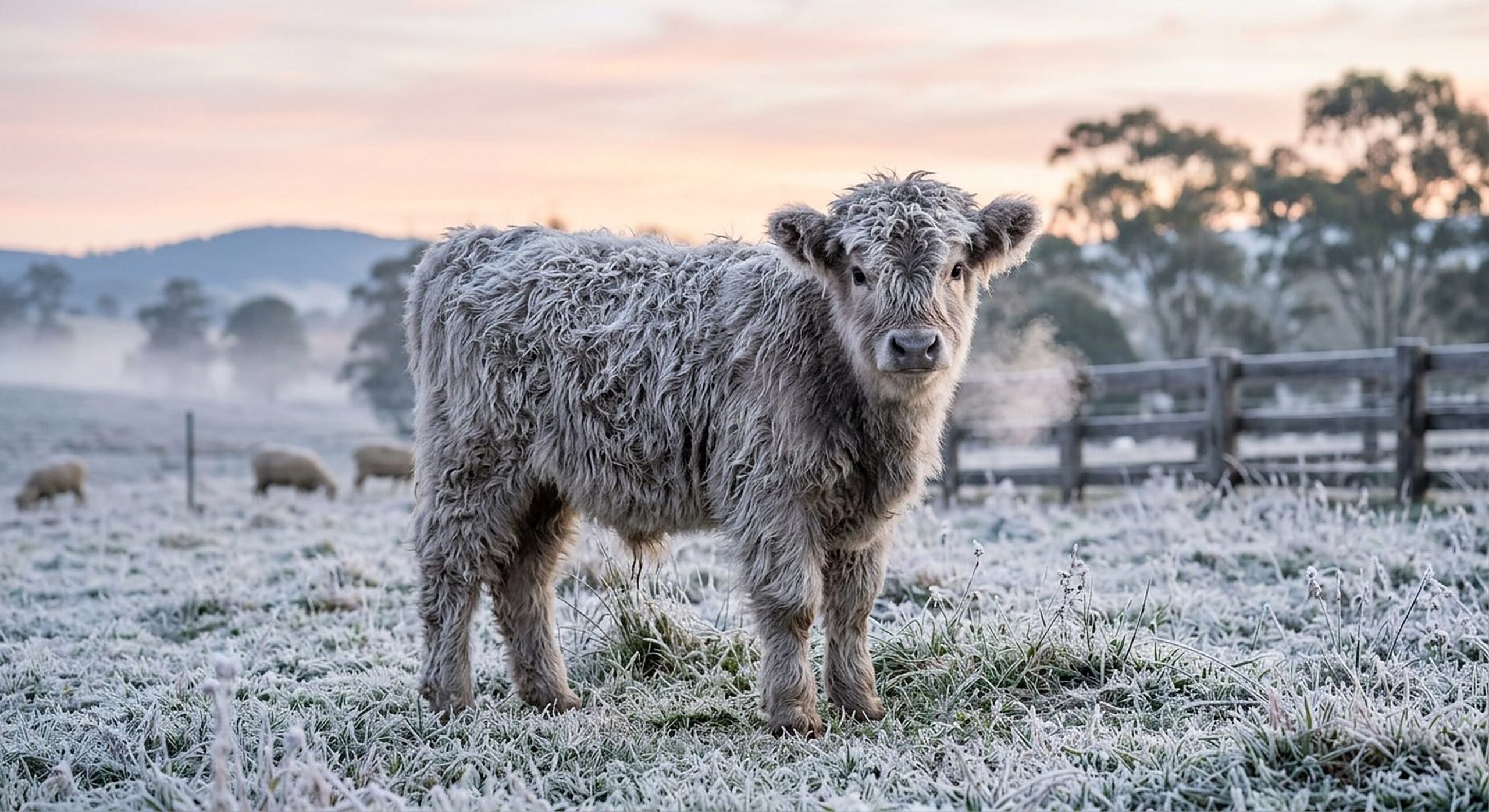
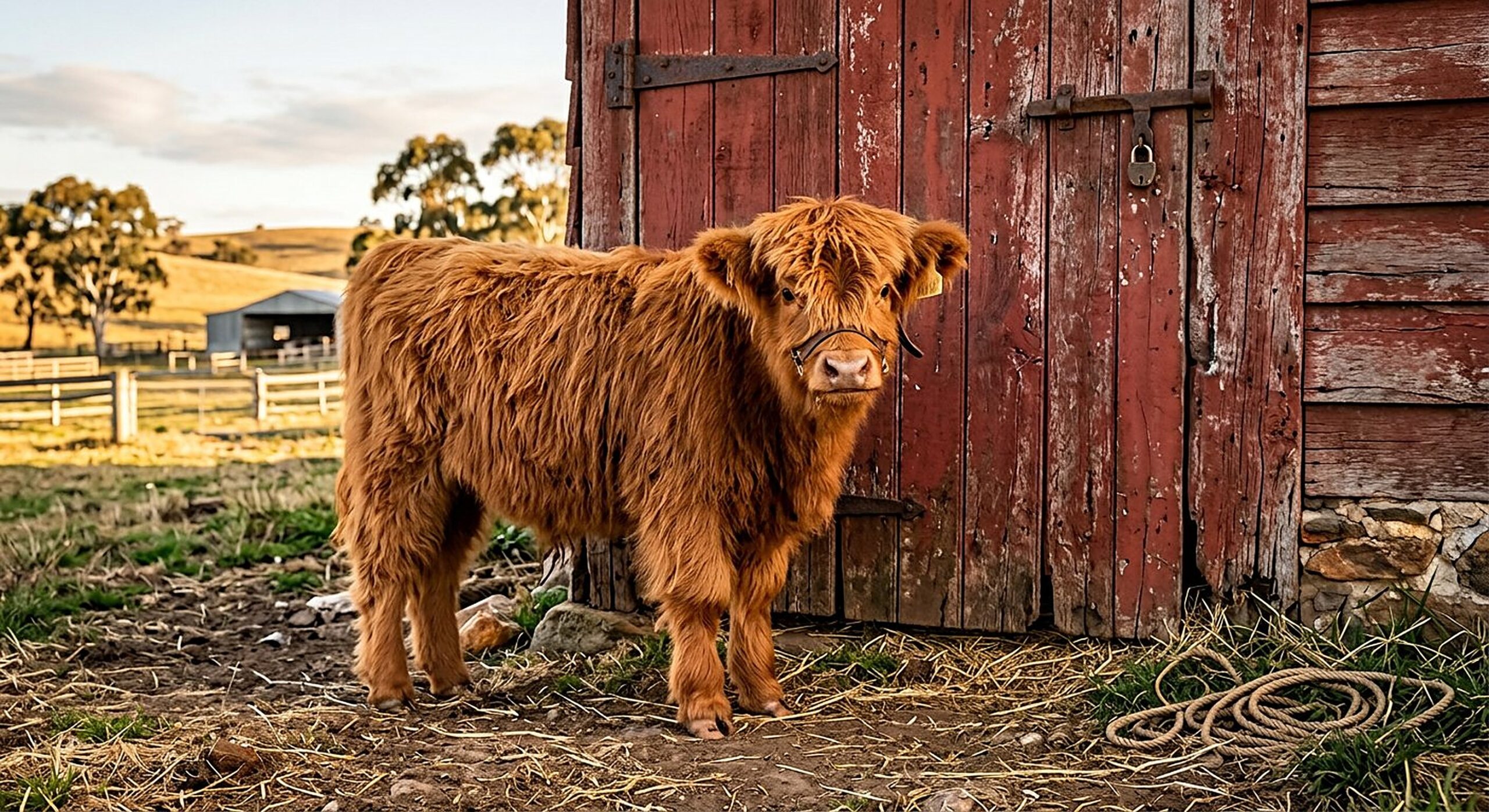
For families torn between two shades, a practical tiebreaker: picture your actual paddock. Pale creams vanish beautifully into frost and dry summer grass; blacks command green winter fields; reds and goldens perform at sunset like they were commissioned for it. Your landscape is the frame — choose the picture that suits the wall.
Planning around miniature highland cattle care guide
Remember, too, that herds evolve. The colour you start with needn’t be the colour you end with; many folds become rainbows one well-chosen calf at a time. The first decision only has to be a good animal from good people. The palette can compose itself across the years, which is frankly the most enjoyable way to collect anything.
And if a particular shade is genuinely non-negotiable — the childhood dream, the promised paddock portrait — then own that completely and simply budget the wait. Breeders respect a clear, patient colour request far more than a frantic any-colour-this-weekend one. State it, settle in, and let seasons do what they do.
There’s a particular hour — late afternoon, chores done, kettle imminent — when cattle people understand their own life choices completely. The herd is settled, the light is doing its thing across the coats, and the day’s urgencies have shrunk to their proper size. If this guide and this ranch exist for a reason, it’s manufacturing more of that hour for more families.
Ranch life with Highlands also rewires weekends productively. Fences get walked because the walk is the pleasure. Grandchildren learn where food and patience come from. The property stops being a backdrop and becomes a cast of characters, each with a name, a history and strong opinions about the bucket.
Start small and document everything. The photo of the first calf beside the unfinished fence becomes family treasure precisely because nothing was perfect yet. Perfection, in ranching as in most honest trades, is just consistency photographed from a kind distance.
Community is the other crop. Breed societies, field days, the neighbour who lends the crush, the breeder who answers your 9 p.m. text about a calf off her dinner — cattle people accumulate people. Whatever brings you to Highlands, expect to stay partly for the humans.
And the seasons will teach you the rest. Every herd year adds a layer of knowing — this paddock’s recovery time, that cow’s calving tells, the exact week the winter coats ignite. It’s an education you can’t buy, only keep cattle long enough to receive.
So take the small step in front of you. Read the next guide, walk your fences with new eyes, send the enquiry you’ve been drafting in your head for a month. Ranches, like herds, are built one unglamorous, well-chosen decision at a time.
Let’s talk about what a sensible buying timeline actually looks like, because it rarely resembles the highlight reel. Month one is learning: reading guides like this, stalking showcase profiles, checking your fences with new eyes. Month two is conversations: enquiries sent, questions asked, waitlists joined. Somewhere in there, a breeder says the sentence every buyer remembers — ‘we may have something for you’ — and suddenly the hay shed needs finishing by a real date. This unhurried runway is not a flaw in the system. It is the system, and it produces the calm arrivals and twenty-year matches that rushed purchases so often don’t.
There’s a financial rhythm worth planning, too. Beyond the calf itself, year one carries the one-off costs: fence repairs you postponed, a shelter you’ve been meaning to build, yards, troughs, perhaps a float’s worth of transport. Years after that settle into the honest pattern of feed, minerals, health and hay. Families who map year one separately from the steady state are never ambushed by either, and they enjoy the arrival instead of auditing it.
Insurance and contingency thinking belong in the same conversation. Cattle are robust, but fences meet storms, calves meet fences, and vets meet everyone eventually. A modest contingency fund, a relationship with a cattle vet established before any emergency, and a neighbour who can water stock if you’re away — that’s the unglamorous trio underneath every relaxed cattle owner you admire.
It’s equally worth deciding, before you fall for a face, what happens in your herd’s future. Are these pets for two decades, the foundation of a boutique breeding programme, or the start of a beef enterprise? The answer changes which calf is ‘right’ — sex, genetics, colour emphasis, even timing. Breeders ask about your destination not from nosiness but because matching a calf to a fifteen-year plan is literally the job.
More about Miniature Highland Cattle Care Guide
Whether miniature highland cattle care guide is a new idea or a ten-year dream, the next step is a conversation, and ours starts with listening. Bookmark this page if miniature highland cattle care guide is on your horizon; it gathers the guides, calves and people in one place. Everything on this page is written for Australian families researching miniature highland cattle care guide, with the paddock — not the sales pitch — kept firmly in view. If miniature highland cattle care guide is where your research has landed, you are in good company: it is one of the most-loved corners of Australian cattle keeping.
We update our guidance on miniature highland cattle care guide as seasons, herds and questions evolve, so the advice you read here stays practical. Behind every search for miniature highland cattle care guide is a property and a plan; the details you share with us shape the answers we give you. There is no wrong question about miniature highland cattle care guide — only the expensive kind that goes unasked, so ask us anything. Families comparing notes on miniature highland cattle care guide consistently tell us the same thing: slow, honest information beat fast promises.
Whether miniature highland cattle care guide is a new idea or a ten-year dream, the next step is a conversation, and ours starts with listening. Bookmark this page if miniature highland cattle care guide is on your horizon; it gathers the guides, calves and people in one place. Everything on this page is written for Australian families researching miniature highland cattle care guide, with the paddock — not the sales pitch — kept firmly in view. If miniature highland cattle care guide is where your research has landed, you are in good company: it is one of the most-loved corners of Australian cattle keeping.
We update our guidance on miniature highland cattle care guide as seasons, herds and questions evolve, so the advice you read here stays practical. Behind every search for miniature highland cattle care guide is a property and a plan; the details you share with us shape the answers we give you. There is no wrong question about miniature highland cattle care guide — only the expensive kind that goes unasked, so ask us anything. Families comparing notes on miniature highland cattle care guide consistently tell us the same thing: slow, honest information beat fast promises.
Whether miniature highland cattle care guide is a new idea or a ten-year dream, the next step is a conversation, and ours starts with listening. Bookmark this page if miniature highland cattle care guide is on your horizon; it gathers the guides, calves and people in one place. Everything on this page is written for Australian families researching miniature highland cattle care guide, with the paddock — not the sales pitch — kept firmly in view. If miniature highland cattle care guide is where your research has landed, you are in good company: it is one of the most-loved corners of Australian cattle keeping.